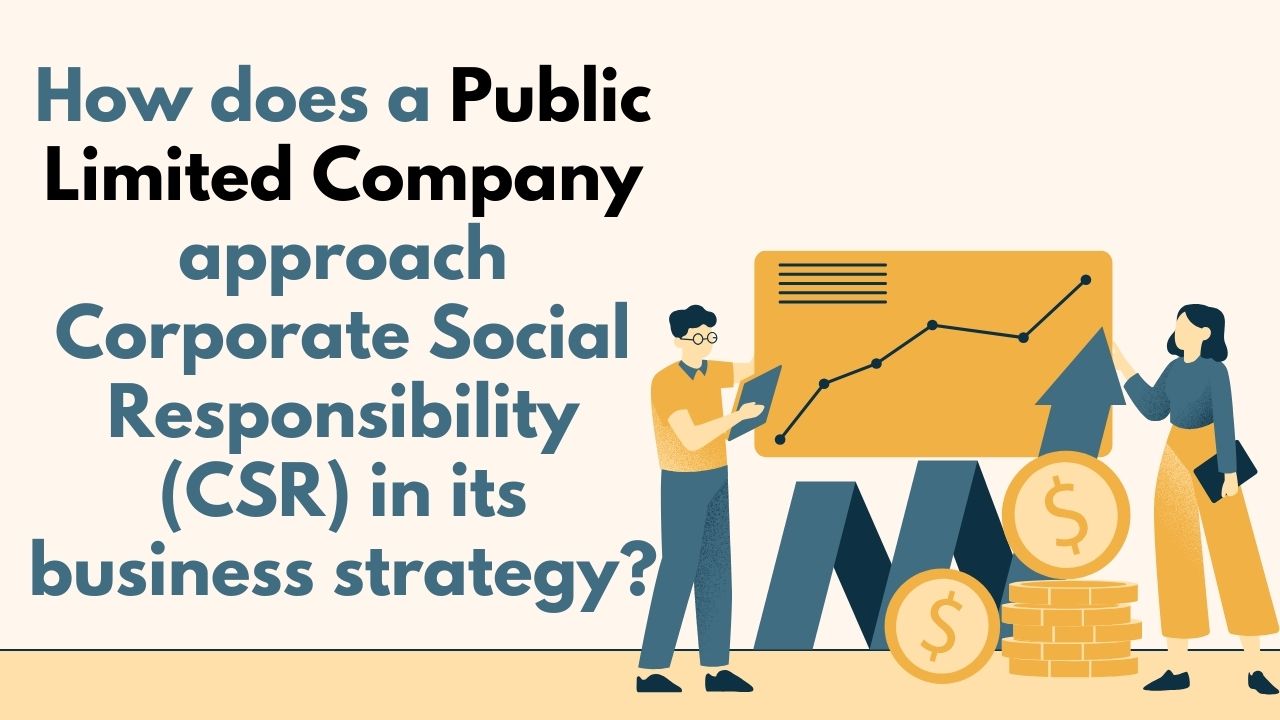
How PLCs Incorporate CSR into Their Business Strategy
1. Identifying Key CSR Areas: PLCs identify CSR areas by assessing their values, operations, and stakeholder expectations, covering sustainability, social initiatives, community engagement, and ethical practices.
2. Setting CSR Objectives: PLCs identify CSR areas and set measurable objectives aligned with their mission and values.
3. Integrating CSR into Governance: PLCs frequently incorporate CSR considerations into their corporate governance framework, with boards of directors establishing CSR committees or appointing specific directors to oversee CSR initiatives.
4. Stakeholder Engagement: PLCs interact with diverse stakeholders to comprehend their viewpoints and CSR expectations. This feedback and collaboration play a pivotal role in shaping CSR strategies.
5. Environmental Responsibility: Companies adopt practices to diminish their environmental impact, which can encompass sustainable sourcing, energy conservation, waste reduction, and the use of renewable energy solutions.
6. Social Initiatives: Many PLCs engage in social initiatives that promote employee welfare, diversity and inclusion, fair labor practices, and community development.
7. Ethical Business Practices: PLCs commit to ethical business conduct, including transparency, anti-corruption measures, and responsible supply chain management.
8. Philanthropy and Charitable Giving: Companies often contribute to philanthropic causes, donate to charitable organizations, or establish their own foundations to support social and community initiatives.
9. Reporting and Transparency: PLCs issue regular CSR reports, outlining their activities, achievements, and performance in CSR domains, and often make these reports public to uphold transparency and accountability.
10. Alignment with Sustainable Development Goals (SDGs): Many PLCs align their CSR initiatives with the United Nations' Sustainable Development Goals (SDGs) to address global challenges and create positive social and environmental impact.
11. Measurement and Evaluation: PLCs employ KPIs to measure CSR impact, with regular evaluation and reporting for tracking progress and identifying areas for improvement.
12. Regulatory Compliance: Compliance with local laws and regulations related to CSR is a fundamental component of a PLC's CSR strategy.
13. Long-Term Perspective: CSR is viewed as a long-term commitment integrated into the company's strategic planning.
14. Public Engagement and Communication: PLCs communicate their CSR efforts and achievements to the public, shareholders, and other stakeholders through various channels, including websites, social media, and annual reports.
© 2020 CREDENCE CORPORATE SOLUTIONS PVT. LTD. | Website by Wits Digtal Pvt. Ltd.










Leave a Comment